Go back
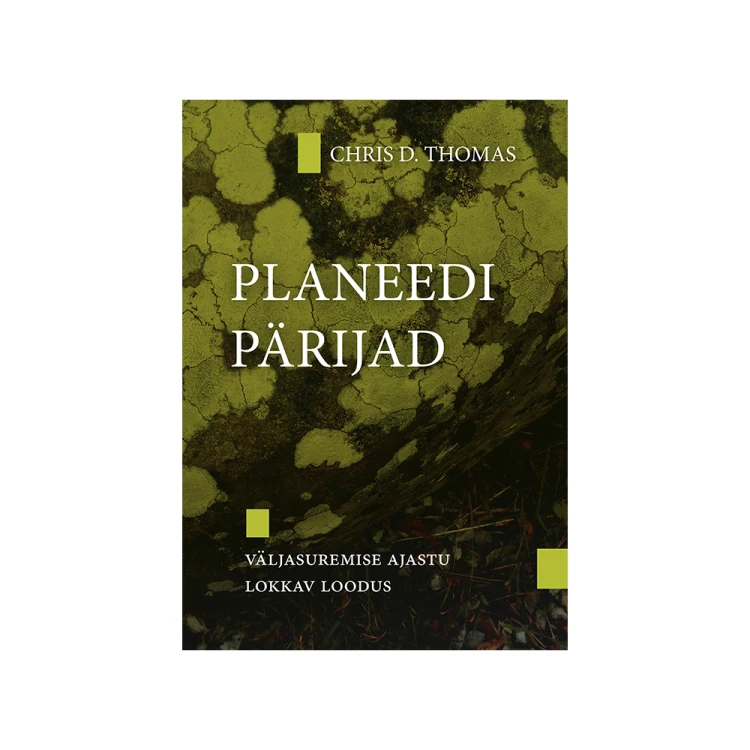
Book "Inheritors of the Earth: How Nature Is Thriving in an Age of Extinction" Estonian translation
Inheritors of the Earth: How Nature Is Thriving in an Age of Extinction
Chris D. Thomas
Ecologist and evolutionary biologist Chris D. Thomas (1959) discusses environmental change from an intriguing angle in the book. He points out that in addition to the negative effects of human activity, there are also surprisingly many positive trends in nature. With the support of lush descriptions of nature and numerous scientific studies, the author presents how many species cope very well despite the warming of the climate and the transformation of landscapes. Species emerge, mix, and relocate both now and in the future. Wildlife always adapts.
But how does a person, who is also a part of nature, adapt? And why do we take on the role of judge to decide what nature should be and not even be consistent about it?
The author believes that although there are plenty of reasons to reduce anthropogenic climate change, we should not limit biological changes or try to preserve the planet as if under a glass dome. Life on Earth survives because life on Earth changes. There is no need to intervene just because something is different than before.
The author of the book suggests that every time we feel the need to fight against some biological change, we should ask ourselves three questions. First of all - would our effort make sense even in the perspective of a few hundred years? If not, we face a losing battle. Second, would our great-grandchildren's great-grandchildren be very upset by the change in the situation, given that they don't know exactly how things are now? If the answer is no, then we are fighting a pointless battle. And if change is inevitable, as it often is, a third question should be asked: How can we maximize the benefits our descendants derive from the natural world? In other words, how do we promote changes that could be beneficial to humans in the future while avoiding the loss of species that could prove important in ways unknown to us in the future?
Price: 25.00€